Quick answer
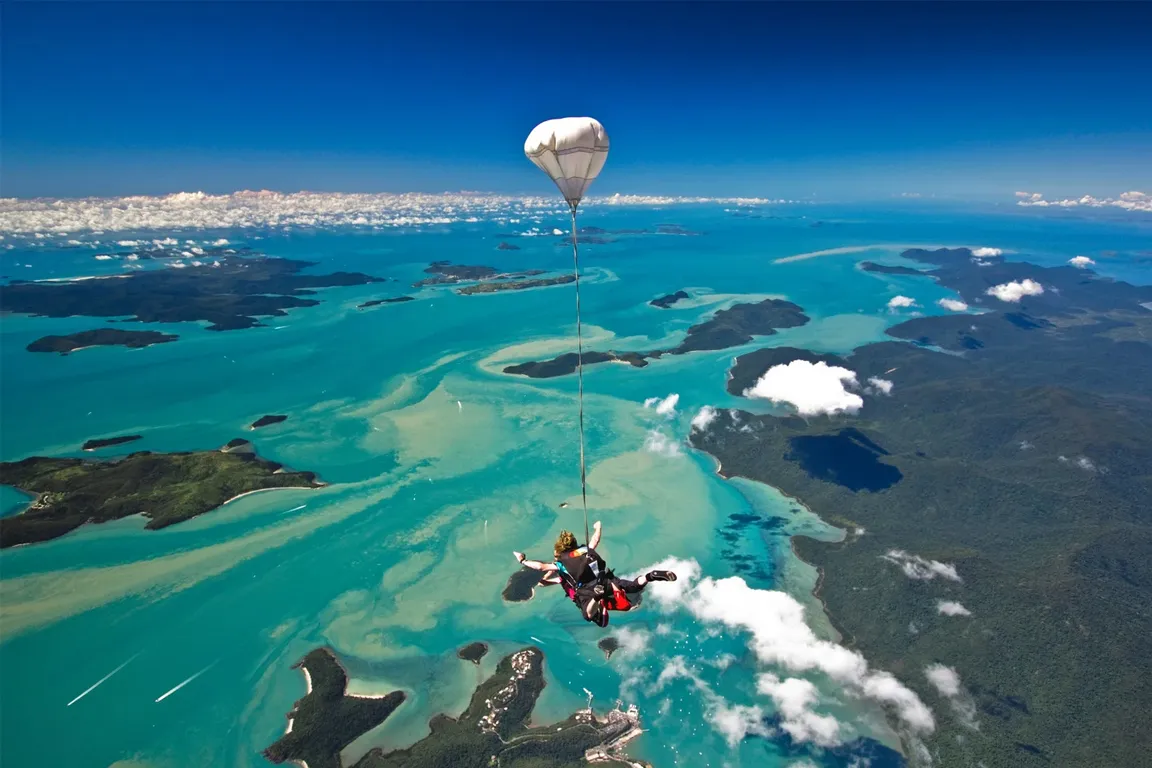
You can skydive in Australia at licensed drop zones in New South Wales, Queensland, Victoria, South Australia, Western Australia, Tasmania, the Northern Territory, and the Australian Capital Territory. Coastal operators cluster around Wollongong, Byron Bay, Cairns, Mission Beach, and Rottnest Island; inland centers operate near Barossa Valley, the Yarra Valley, and Alice Springs. Most tandem operations run year-round at altitudes between 10,000 and 15,000 feet, with jumps over beaches, reefs, vineyards, or desert depending on the zone.
Skydiving in Australia began as a military discipline in the 1950s and transitioned to civilian sport by the 1970s, when the first recreational drop zones opened near Sydney and Melbourne. Today the country supports more than 60 FAA-equivalent certified operations, regulated by the Australian Parachute Federation under Civil Aviation Safety Authority oversight. Each operator holds zone-specific airspace clearances and weather minimums, which shape where and when jumps occur. Coastal drop zones dominate the eastern seaboard. Wollongong, 90 minutes south of Sydney, offers ocean landings and views across the Illawarra escarpment. Byron Bay pairs beach scenery with year-round stable weather, while Mission Beach in far north Queensland positions tandem exits over the Great Barrier Reef and Dunk Island. Cairns operators fly from a shared airfield and route jumps over reef sections visible from altitude. Rottnest Island, off Perth, provides island-circle views and Indian Ocean horizon lines. Each coastal zone depends on offshore wind patterns—morning slots typically see calmer conditions than afternoon sessions. Inland skydiving centers spread across agricultural and desert terrain. Barossa Valley, an hour north of Adelaide, combines vineyard patchwork with hill country. The Yarra Valley east of Melbourne offers alpine backdrops and river valleys. Alice Springs operates one of the few desert-based drop zones, with Red Centre geology visible during freefall. Northern Territory jumps near Darwin overlook wetland systems and tidal flats. These inland zones often face fewer weather delays than coastal sites but trade ocean views for geological variety. Tandem operations constitute the majority of civilian skydiving in Australia, with solo and accelerated freefall courses available at select centers. Most operators fly Cessna Caravans or PAC 750XL aircraft, which accommodate eight to sixteen jumpers per flight. Exit altitudes range from 10,000 feet (about 40 seconds freefall) to 15,000 feet (60 seconds), with the latter requiring supplemental oxygen pre-jump. Video packages, weight surcharges above 94 kilograms, and transport from nearby cities add to base tandem fees. Regional operators often require advance booking during peak summer months (December through February) and around public holidays, when airspace slots fill quickly.
“Australia operates more than 60 commercial skydiving centers, distributed across coastal beaches, inland plains, and regional airfields.”
Best Time and Arrival Windows When Deciding Where to Skydive in Australia
The best arrival window for skydiving in Australia is 07:00–12:00. Scheduling your jump during these morning hours minimizes exposure to afternoon wind changes and reduces the likelihood of weather-related delays.
Summer (Dec–Feb)
High crowd volumeWarm, stable, occasional storms; 20–30°C
Expect higher demand during school holiday periods.
Autumn (Mar–May)
Moderate crowd volumeMild, clear skies; 15–25°C
Often considered the most consistent period for visibility.
Winter (Jun–Aug)
Lowest crowd volumeCool, crisp mornings; 8–18°C
Clear conditions are common, though wind speeds vary.
Spring (Sep–Nov)
Moderate to highVariable weather; 12–22°C
Early spring offers stable air before summer wind patterns develop.
Verdict: For the most stable conditions, aim for an arrival window of 07:00–12:00 during the autumn months of March through May.
Operating Hours for Where to Skydive in Australia
The facility maintains consistent operating hours throughout the week to accommodate skydiving operations.
| Monday | 07:00–18:00 | |
|---|---|---|
| Tuesday | 07:00–18:00 | |
| Wednesday | 07:00–18:00 | |
| Thursday | 07:00–18:00 | |
| Friday | 07:00–18:00 | |
| Saturday | 07:00–18:00 | |
| Sunday | 07:00–18:00 |
Standard Costs When Researching Where to Skydive in Australia
The cost of skydiving in Australia typically centers on the base tandem skydive experience. Prices remain consistent for standard participants, though additional fees apply based on individual physical requirements.
The base tandem skydive price is 385 AUD, with additional surcharges applicable for passengers weighing over 94kg.
Directions for Where to Skydive in Australia
The skydiving facility is located at 5/89 York St, Sydney NSW 2000, Australia. The easiest approach for visitors is via public transport to the nearby Wynyard or Town Hall stations.
T1, T2, or T3 line to Wynyard Station
Metro line to Martin Place Station
M1 or A4 to York St
Walk from George St toward York St
Pre-Visit Checklist for Where to Skydive in Australia
Complete these steps to ensure a smooth skydiving experience and meet all safety requirements.
-
Book your jump in advance — Slots fill quickly, especially for morning departures that avoid weather delays.
-
Confirm weight and age eligibility — Participants must be 12+ and under 94kg to avoid surcharges or restrictions.
-
Wear closed-toe shoes and fitted clothing — Loose garments and sandals are unsafe for freefall and landing.
-
Bring valid photo identification — Government-issued ID is required to verify age and complete waiver documentation.
-
Complete medical declarations honestly — Certain conditions require doctor clearance before you can jump.
-
Arrive at least 30 minutes early — Check-in, briefing, and gear fitting take time before your scheduled departure.
-
Skip heavy meals beforehand — A light snack prevents discomfort during freefall and canopy ride.
Check availability
Frequently asked questions about where to skydive in australia
Everything you need to know about where to skydive in australia